


CURATED FIBRES
FABRICS & MATERIALS
It all starts with fibre and fabrics. We focusing on using materials we have identified that best balance durability, natural origin, and performance
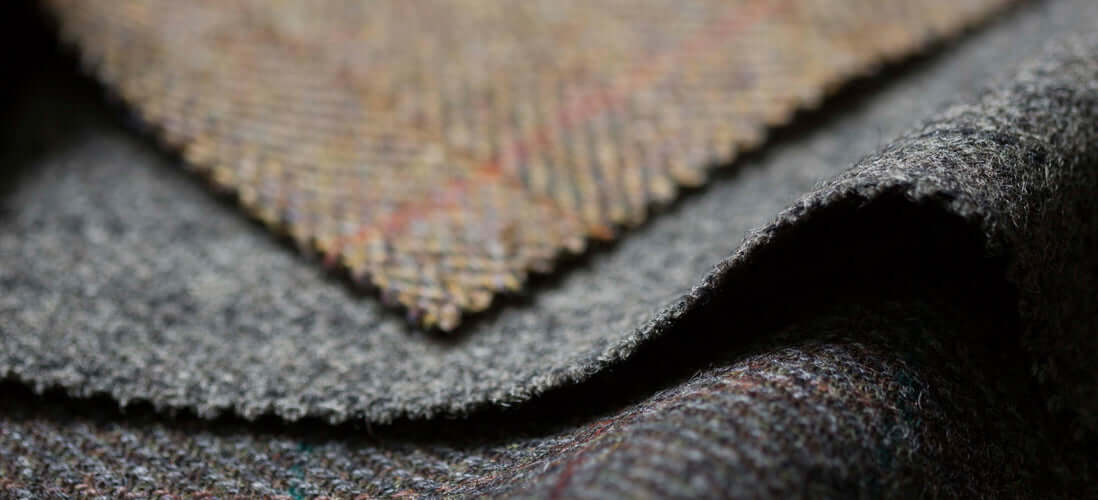
Harris Tweed: Made from 100% British wool, naturally renewable, biodegradable and recyclable. Add to this that wool is breathable, wind and waterproof and flame resistant, all without the need for additional finishes.
Merino Wool: 100% natural, renewable, biodegradable and recyclable (biodegradable under appropriate conditions and recyclable where textile recycling infrastructure exists). Merino wool is also an odor-resistant, breathable fabric, it's natures technical fabric. We use merino wool in our socks and beanie hats. All our wool is non-mulesed. N
Recycled Nylon: There is a small percentage of recycled nylon and Lycra used in our socks. Rather than using virgin nylon, we utilise recycled nylon which provides the most sustainable option whilst ensuring the functionality and longevity of our socks.
Waxed Canvas Organic Cotton: BCI and OCS certified organic cotton using plant based wax and oils to provide weather proofing in a sustainable way for our head covers, shoe bags and dopp kits. For our Mackenzie Golf Bag collaboration we use organic cotton base with fluorocarbon finish free with excellent water proofing properties.
Premium Bamboo: used for our golf tees, bamboo is a more environmentally friendly option than standard plastic tees. Bamboo is a fast growing, sustainable natural resource which is strong and durable.
The Honesty Box. Whilst we strive to use only natural,sustainable materials, sometimes there is no option but to use some synthetic materials and sometimes to get the balance between durability and product performance. So to be transparant the below are the non sustainable materials we use:
Elastane: used for the internal grips on our headcovers. We previously used an organic cotton and rubber version, but found a small percentage of inconsistency in tension causing some issues with usability. Therefore to remove, even though only minimal, any risk of product issues, we use elastane.
Polycotton: The linings in our headcovers and some acccessories are made from part polyester or cotton/polyester mixes. From testing and experience, the strength of poly is far greater than 100% organic cotton linings which is required to ensure durability and function for these products.

RESPONSIBLE WOOL STANDARD (RWS)
We work with each mill and factory in Scotland to ensure we source all knitwear fibre from non-mulesed sheep. The merino wool used in our beanie hats is sourced from Responsible Wool Standard (RWS) certified farmers. RWS is the highest globally recognised standard for animal welfare. Wool used in our socks is non-mulesed and we are working towards full RWS certification.
What is the RWS?
The Responsible Wool Standard is a voluntary standard that addresses the welfare of sheep and the land they graze on.
Objectives of RWS:
1. Provide the industry with a tool to recognise the best practices of farmers.
2. Ensure that wool comes from farms that have a progressive approach to managing their land, practice holistic respect for animal welfare of the sheep and respect the Five Freedoms of animal welfare.
3. Ensure strong chain of custody for certified materials as they move through the supply chain.
THE MATERIAL REALITY
Understanding what sits behind many golf accessories
Many conventional golf accessories make use of synthetic, petroleum-derived materials that do not readily break down at the end of their life.
To provide context for our own fabric and material choices, below are examples of materials commonly found across the golf industry, along with their general characteristics.
Headcovers
PU, polyester, and polyurethane are widely used in club headcovers. These materials are derived from fossil fuels and, in most cases, do not biodegrade. Recycling options for these materials are limited and depend on specialist infrastructure.
Knitted hats
Many knitted golf hats are made from acrylic rather than wool. Acrylic yarns are petroleum-derived synthetic fibres. During washing, these fibres can shed microplastics, which may pass through water treatment systems and enter waterways.
Socks
Acrylic and polyester blends are commonly used in golf socks due to their durability and stretch. These fibres are synthetic and are not biodegradable. Recycling options for mixed synthetic textiles remain limited.
While synthetic materials offer certain functional benefits, they are typically derived from non-renewable sources and present challenges at end of life.
For this reason, Fyfe Golf prioritises natural fibres and organic certifications where possible, choosing materials for durability, longevity, and responsible sourcing, while being open about the limits and trade-offs involved.